For everything, there is a last time.
“Congrats, you’ve been selected for Grad School” the commander announced as he sat down in my hooch. I didn’t know it at the time, but this would be my last deployment to the AOR. That simple proclamation set in motion a series of events that would lead to promotions, staff assignments, and a command of my own. Save one exercise in Israel, I would never return to the region that had dominated so much of my career. But I would never forget it, or the profound impact it had on my life. It had forever changed me.
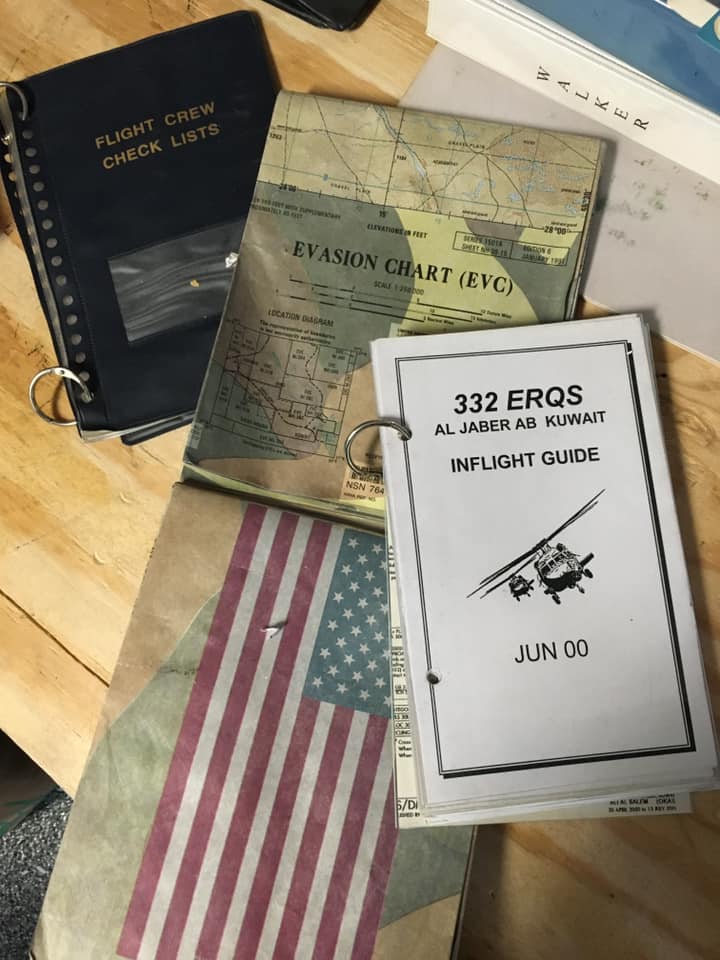
In the final tally, I deployed seven times in two airframes—first as Combat Rescue pilot, then as a U2 driver. This factual recitation is in no way a boast. How could it be?
So many others had done so much more while suffering and sacrificing in ways the uninitiated would find difficult to comprehend, believe, or fully appreciate. I offer two examples from the countless many:
Enlisting for a three-year tour as a Combat Medic, my nephew served seven years before he was finally allowed to separate. Always deployed and continuously “stop-losted”, his story was not uncommon.
Early on, he excitedly told me about his role and responsibilities. “Uncle Curt, when we breech a building, the medic stays in near-center. The team always needs to know where I’m at. I also guard and treat the captured…” he went on.
But then, as his young marriage fell apart under the strain, as the traumas piled up, and as his friends were killed, an overwhelming sense of hopelessness and despair washed over him. Somewhere along the way, he stopped talking much to his family and hardly spoke with anyone.
Finally released from service, he found it difficult to concentrate, go to school, or hold a job. Staying up all night playing video games, then passing out for a few fitful hours became the norm. Still a young man, he was taking handfuls of prescription meds for the physical and mental anguish he suffered.
I’m happy to report he has improved, but it’s been a painful journey that’s taken years. I’m proud of him, but ever mindful that far too many still suffer and far too many resort to suicide.
PFC Hockenberry is a soldier I never met, but as a freshly-promoted Colonel charged with training new staff officers at a Combatant Command, I spoke of him often.
Showing the Stars&Stripes, Pulitzer Prize-winning, photo of him at the end of my briefing, I would explain his story “In this photo, you’re are meeting PFC Hockenberry on the worst day of his young life. His squad was just struck by an IED, many of his friends were just killed. Miraculously, despite losing both legs and his left arm, he survived. As medics cut away his clothing, the photographer noticed his tattoo.” I went on “Look closely and you’ll see it says ‘For those I love, I will sacrifice’”. And I finished with “every decision we make, every strategy we inform, all the resources we allocate, end with someone like PFC Hockenberry. Make sure your effort is always worthy of their commitment and sacrifice.”
Then there’s me. After thirty-three years of service, I’ve found my own ways to cope. Like many vets, I go to therapy and take my meds. I do so without shame or apology—I owe it to my family and myself. I also think and write, some of which I share and most of which I don’t. I find it cathartic to unbottle thoughts that leave me troubled, frightened, or agitated. The wisdom of Mr. Rogers applies, “If you can mention it, you can manage it”.
I’m forever grateful for the opportunity to suit up and serve my country, it was the highest honor of my life.
Thanks for reading.


 If you could read my mind...