Rising in the predawn darkness of Sept 11th, 2001, I tried not to wake my wife. I showered with the bathroom door shut and didn’t turn on the sink-top radio as was my habit. Exiting, I left the door open a crack to dress in the minimal light it provided. Gathering my things, I kissed her on the forehead as she slept and whispered “see you tonight”. I wouldn’t see her again for three days.
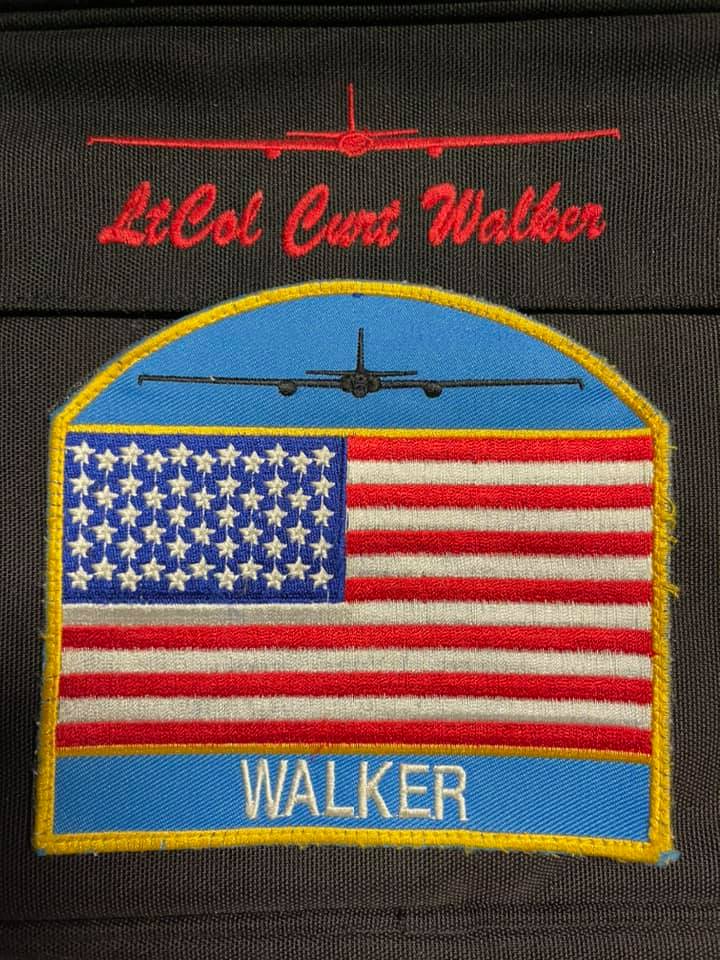
Leaving my suburban neighborhood for the Air Base, I began thinking about the day ahead; I was to participate in a major exercise, an event that would finish my U-2 Mission Qualification training. Nine months of rigorous instruction, countless hours of study, and endless hours of preparation had brought me within inches of being a mission-ready pilot in the most difficult and demanding aircraft I’d ever flown.
To keep my mind from racing, I clicked on the car radio for some soothing tunes, but instead heard “…reports are coming from the East Coast…an aircraft has crashed into the World Trade Center…details are still sketchy…”. Assessing what I’d heard and remembering a story about a plane crashing into the Empire State Building in the ‘40s, I speculated it was most likely a light aircraft disoriented by weather. Then, as I showed my ID card to the sentry at the gate, another report “…a second airplane has just hit the South Tower…”. All doubt was removed, the Untied States was under attack.
As the sun rose in California, U-2 pilots were huddled around TVs as we watched in horror as the Pentagon was struck and both WTC towers collapsed. Already, we were in lock-down and a steady stream of foot-traffic traffic was going in and out of our Sensitive Compartmentalised Information Facility (SCIF).
Soon, we were called to our first briefing of the day where our commander announced “We are under attack, the true nature, scope and scale are still unknown. SECDEF has set DEFCON THREE and directed us to prepare for DEFCON TWO…”.
“Holy-shit!” I mumbled to myself. Those words, only used a handful of times in our history, came with a very specific actions and set us on a very dangerous course. I thought back to the big bank-fault door I had entered not long ago to be “read-in”. The kind of place where, despite my lofty security clearance, I had to sign in, agree to ominous and threatening statements, then be monitored as I read a dusty, archaic, binder of Doomsday plans , reminiscent of Stanley Kubrick’s 1964 film “Dr. Strangelove”.
Immediately, we set about readying every airplane that could fly to be ready to do so within 15 minutes. Our leadership was brilliant as they quickly organized people and resources, then doled out crew assignments to everyone. It was frantic, chaotic, and a thing of beauty.
By the end of day-one, as we slept in shifts under desks and in hallways, the nature of the attack became clearer: this wasn’t Armageddon, it was terrorism.
And as the Pentagon still smoldered, our team began planning. Knowing we would soon be called upon to join the looming fight, we would be ready to move quickly. The Dogs of War were about be unleashed and all Hell would follow.
I was exhausted, physically and emotionally, when I finally drove home. Everything had changed. In the weeks ahead, we would all be fanning out around the globe and there would be no respite, we were all-in.
I would first go to Korea to patrol the DMZ through the Fall, Thanksgiving, Christmas and New Year’s. Our most seasoned, veterans of the Gulf War and ALLIED FORCE, would be leaving to stand up a new operation. Our “Afghan-Eight” had a monumental task ahead and I would be rolling in on what they would build from thin-air shortly.
As I reached my neighborhood, I was overwhelmed by what I saw: every home and business, without exception, was flying an American flag. I got a lump in my throat. And when I pulled into my garage, I closed the door and wept.
 If you could read my mind...